Why Engineering Biology Is Expected to Be the Game Changer in Every Industry
Rapid innovation is happening in engineering biology with the rise of AI and genetic engineering technology. What exactly is it, how does it impact businesses, and which Japanese startups should we keep our eyes on?
Written by Atsuhi Ueda, edited by the Universe Editorial Team
My name is Atushi Ueda, and I am investing in startups at Global Brain (GB)’s Kyoto Office.
I was previously engaged in research and development of functional foods using gut microbiome at Otsuka Pharmaceutical Co., Ltd. During my Ph.D. years, I researched how gut microbiome can prevent Alzheimer’s-type dementia. Based on my experience, I currently invest in startups doing businesses related to microbes, synthetic biology, biotechnology, life sciences, food, and agriculture.
Engineering biology is a sector recently attracting attention in the biotechnology field. Although it was previously known as synthetic biology or SynBio which are more academic terms, the term engineering biology is becoming more common as a word that sheds light on the use of synthetic biology technology for developing products and services.
In this article, I will introduce engineering biology and its latest topics together with Japanese startups our firm has invested in.
Engineering biology was used to develop COVID-19 vaccines, but what exactly is it?
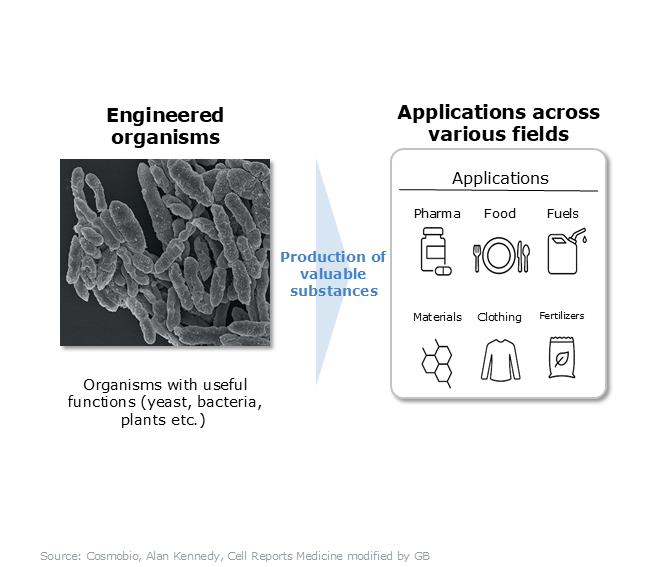
Engineering biology is a field of technology that uses biotechnology to engineer functional organisms (called engineered organisms or engineered cells) and produce valuable substances through bioprocesses.
Engineered organisms or engineered cells, known as smart cells in Japan, is a term that refers to organisms or cells including bacteria, yeast, plants, etc. whose capabilities to produce valuable substances have been enhanced with the power of biotechnology. Biomanufacturing which uses engineered cells in its process can be applied to a wide variety of sectors such as pharmaceuticals, food, fuel, and clothes.
For instance, engineering biology was used by Moderna, Inc. to develop its mRNA vaccines to fight COVID-19. In its manufacturing process, a US engineering biology pioneer Ginkgo Bioworks Holdings Inc. funneled USD 25 million to contribute to vaccine production. This track record played a role in pushing up the startup’s business and Ginkgo Bioworks was listed on NASDAQ as a unicorn company in 2021.
Why engineering biology is attracting attention from diverse industries
Among many different types of biotechnology, why is engineering biology especially gathering attention? The secret behind its fame is its eye-opening technological innovation.
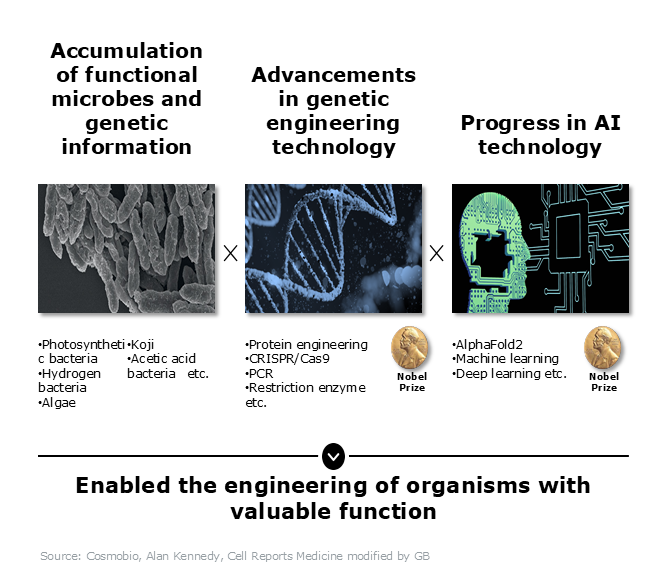
Today, the cost of DNA analysis using next-generation sequencers (devices that can determine genome sequences with high throughput) is down to one-millionth compared to 20 years ago. This has enabled the rapid accumulation of genetic information from valuable microbes. The technological innovation has been so amazing that Nobel Prizes have been awarded to breakthrough genetic engineering and AI technologies in recent years.
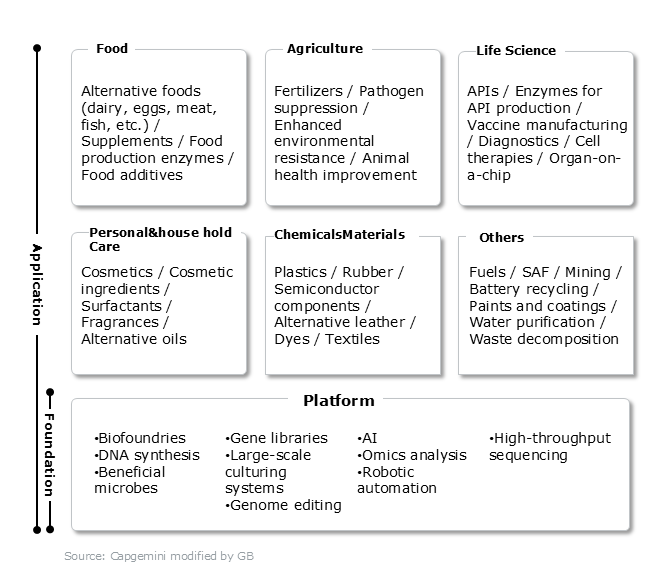
As mentioned, synthetic biology itself has existed since before our times as a field of study, but technological innovation played a big role in progressing engineering biology even more. This technology is now being fast applied for many purposes in various sectors and attracting attention from diverse industries. For example, precision fermentation in the food industry, microbial fertilizers for agriculture, vaccine development in the medical field, plus cosmetics, semiconductor parts, fuel, and the list goes on.
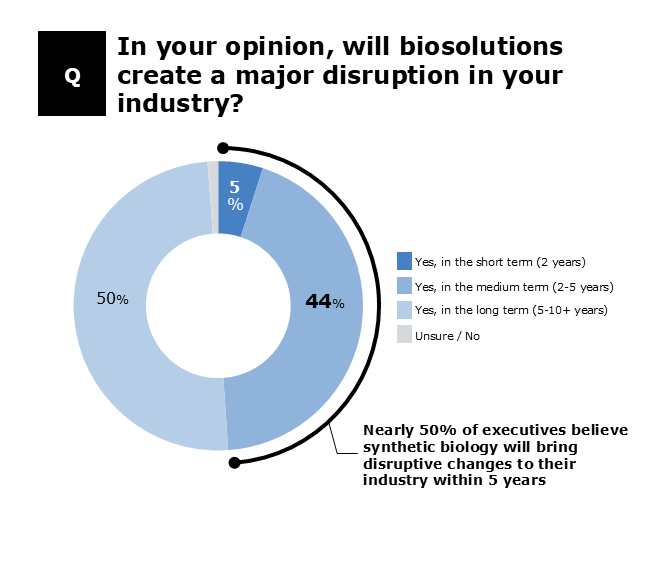
A survey of 1,100 executives at large organizations with over USD 1 billion in annual revenue shows that a surprising 96% of the respondents are pursuing biosolutions. Furthermore, approximately half of them expect that engineering biology would disrupt their industry within the next five years.
Japan has the potential to lead the world
It is not only businesses that have eyes on engineering biology, but governments around the world are ramping up their support to this field of technology.
The World Economic Forum Annual Meeting 2024 pointed to the importance of blended finance mechanisms in channeling investment into engineering biology. Blended finance is an investment scheme where public and private funding are combined to reduce the business and technology risks of early-stage companies.
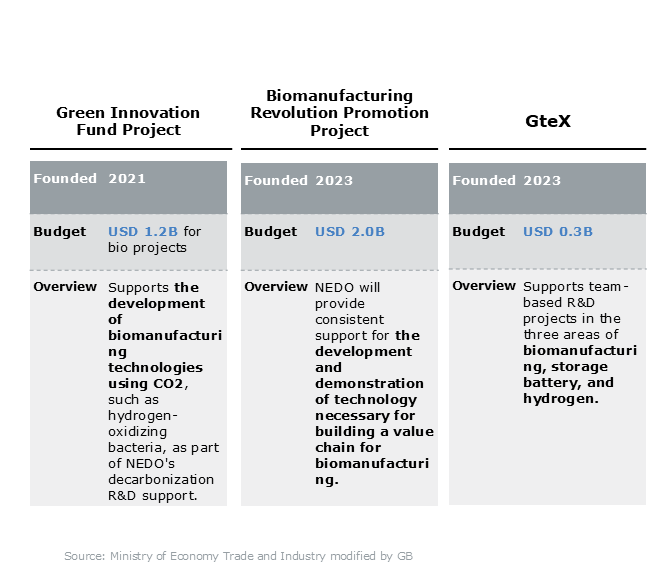
Shifting our eyes to Japan, the Cabinet Office has set a goal of increasing government and private investments in biomanufacturing to 3 trillion yen per year by 2030 in its Bioeconomy Strategy. Government-led large-scale projects reaching roughly JPY 500 billion in total have started in the past few years, such as the Green Innovation Fund Project, the Biomanufacturing Revolution Promotion Project, and the Green Technologies of Excellence (GteX), gradually building up an ecosystem.
The world is following Japan’s fermentation technology, a microbial powerhouse with more than 1,000 years of history of handling koji mold, Aspergillus oryzae, and a nation with the tradition to enjoy fermented food. If we use our knowhow successfully, Japan has enough potential to lead the field of engineering biology where we have always fallen behind western nations.
Japanese startups we must watch
In engineering biology, there are five key factors that constitute a company’s competitive superiority.
- Developing foundational organisms
- Developing a rich library of gene sequences for genome editing and developing AI for designing and optimizing gene sequences
- Developing nutritional sources for organisms (e.g., biomass procurement and glycosylation processes)
- Scaling up production
- Identifying valuable substances that can be used for business
Startups who own technologies that can overcome these five challenges will be able to build a strong presence in the field.
bitBiome, Inc.
Looking across Japan, some startups are leveraging engineering biology for their businesses. I would like to bring our attention to startups that have robust proprietary foundational technologies (platforms) and have the potential to apply their technologies to various industries by solving as many of the problems above as possible.
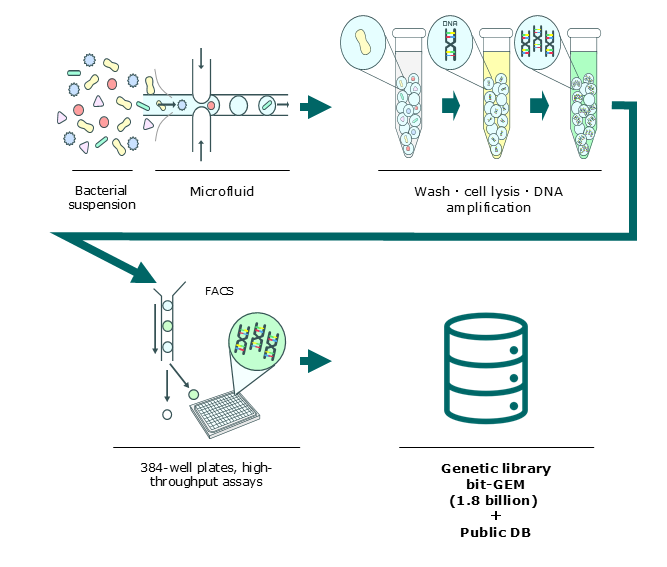
bitBiome is a representative example. This Waseda University spin-off startup owns patented high throughput single-cell sequencing and analysis technology of microbial genomes by separating microbes from microbial communities (a community of microbes that exist in soil, water, and the human body).
Single-cell microbial analysis is a technology that has been selected as one of Nature’s seven technologies to watch in 2025. bitBiome’s technology to efficiently gather functional genes from microbial communities which are treasure troves in the world of engineering biology gives the startup a huge advantage.
bitBiome is currently building the world’s largest database of genes with 2.2 billion genes obtained from microbes unique to Japan, collected from across the country. This allows the company to offer high-quality lead genes that can serve as a starting point for developing useful genes, which can accelerate the development of engineering cells.
bitBiome is even capable of using AI and robots to efficiently develop enzymes needed for biomanufacturing.
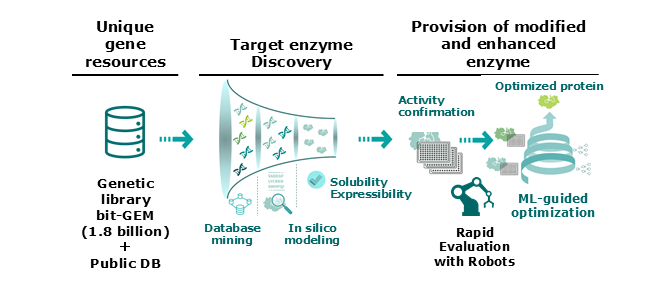
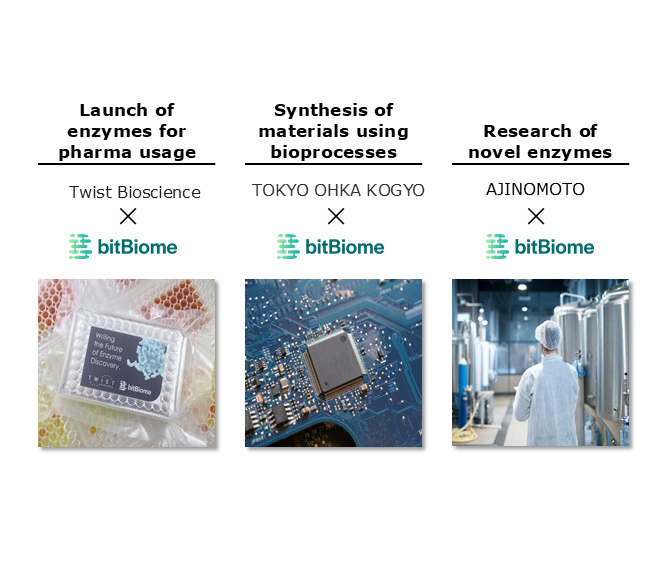
bitBiome is collaborating with companies in diverse industries. It has already launched enzymes for pharmaceutical usage together with Twist Bioscience Corporation and has ongoing projects with Tokyo Ohka Kogyo Co., Ltd. to develop bioprocesses for the production of raw materials and with Ajinomoto Co., Inc. to research novel enzymes.
The Japanese government is focusing on enzymes and enhancing support to this area, regarding it as a key contributor to building biomanufacturing supply chains. For example, increasing domestic production of enzymes used in bioethanol production and enhancing production of glycosidase are both imminent issues. bitBiome’s technology has the potential to achieve breakthroughs in overcoming technological hurdles related to these enzymes, which makes this startup all the more attractive.
endophyte Inc.
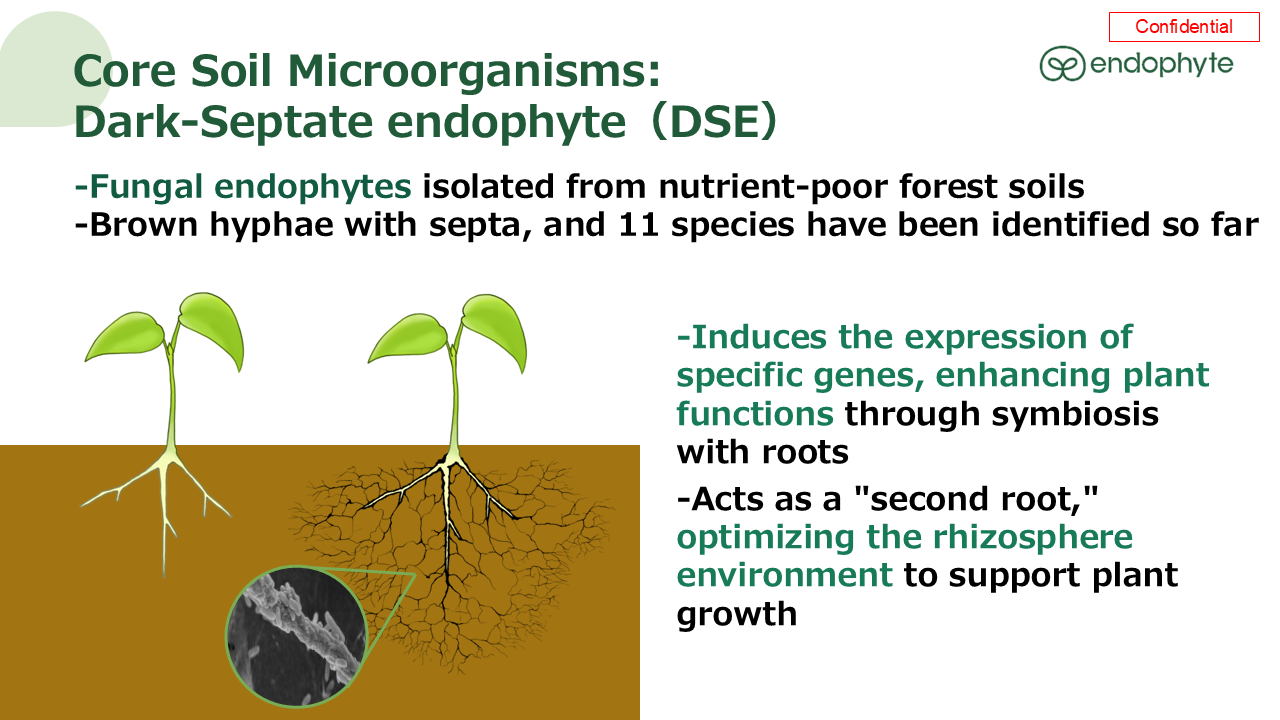
endophyte Inc. is another startup I would like to bring to the spotlight. Although different from synthetic organisms, this company uses natural microbes that function as a platform and can be applied to other fields and usages.
Microbiome exists in soil, and dark septate endophytes (DSEs: fungi found in forests and roots of wild forest trees) which are microbes at the center of the microbiome network, have been found to play many roles including improving plant tolerance to environmental stress and facilitating uptake of nutrients.
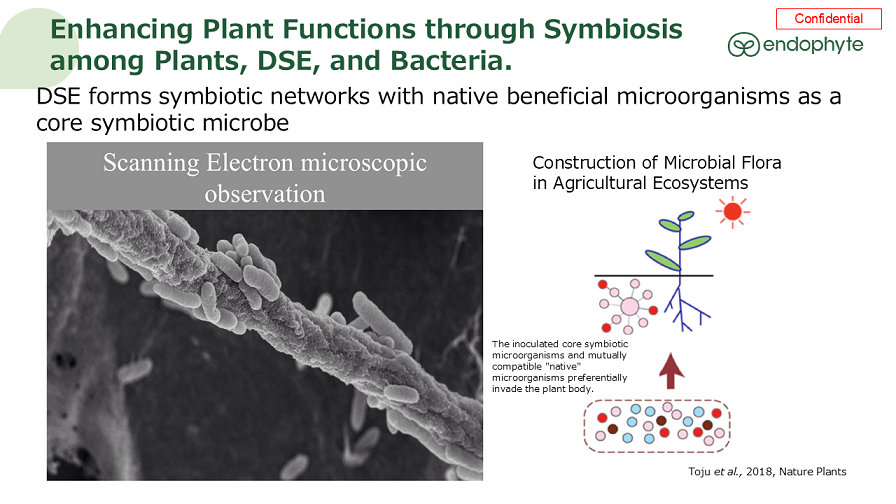
endophyte Inc. has the world’s largest DSE strain library which contains 10,000 strains, and using this as a platform, is able to provide environmental solutions such as urban greening and development of new agricultural methods.
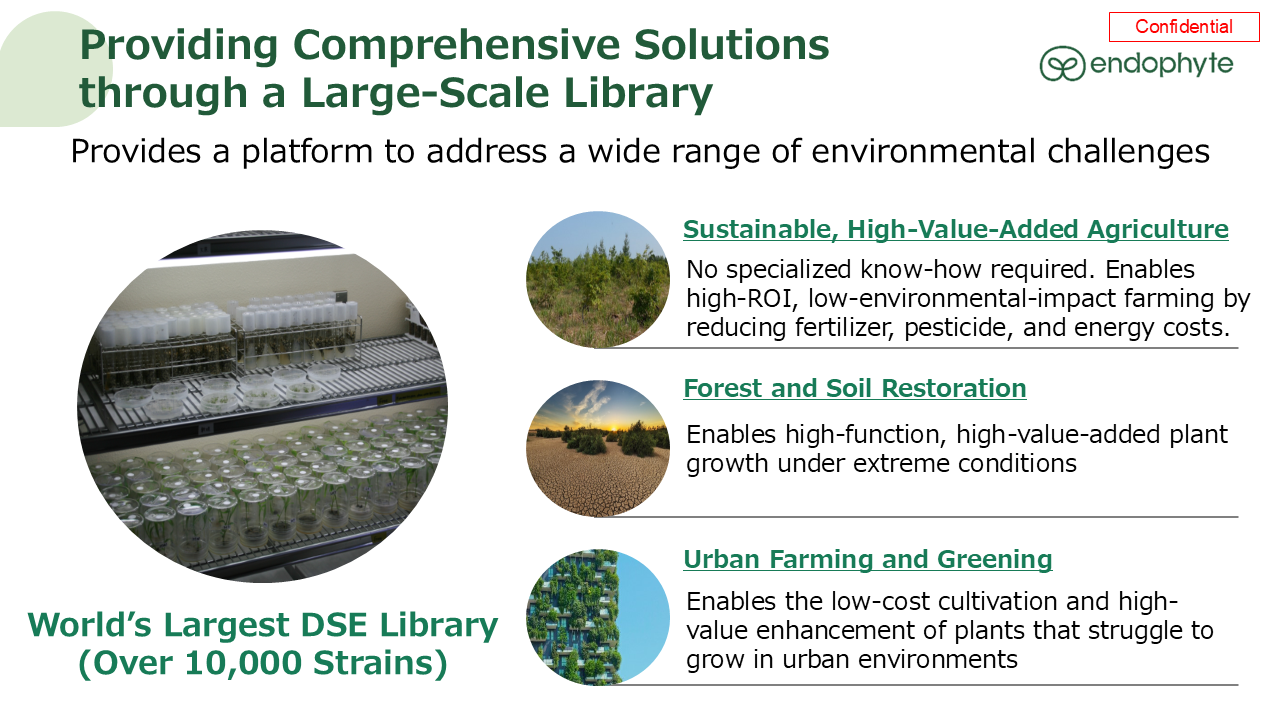
This startup has jointly developed plant cultivation methods and greening/agricultural materials with more than 10 large corporations, and is expected to establish a broad network and demonstrate the feasibility of its technology in diverse areas.
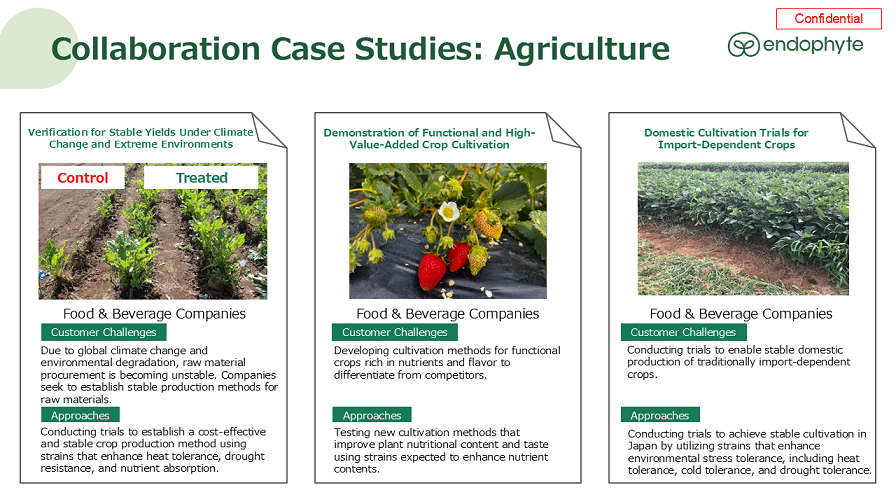
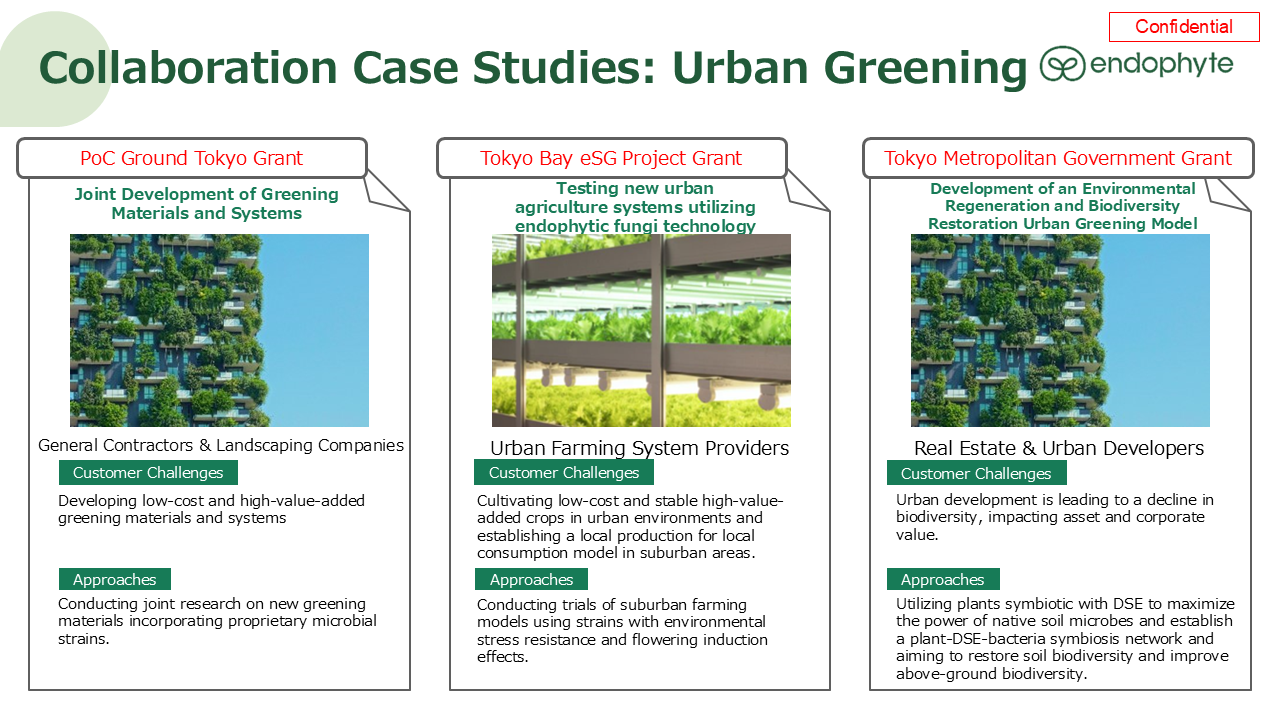
As bitBiome’s enzymes and endophyte Inc.’s natural microbes show, engineering biology is not just about using engineered organisms, but rather, we want to pay attention to the fact that platform technology in this field is diversifying.
Wrap-up
Engineering biology is a disruptive technology with the power to uproot conventional manufacturing. Now that the government has shifted its support into high gear, we find ourselves presented with the perfect opportunity to fully bring out the strength of Japan’s microbe research. Startups that can become platforms have the potential to bring breakthrough innovations in multiple industries, and corporations eager to explore open innovation or new technologies must have their eyes wide open.
In GB Universe, we will continue to feature next-gen state-of-the-art technologies and startups. Please look forward to our upcoming articles.
Follow Global Brain’s official social media accounts to get updates on GB Universe articles.
-
LinkedIn (English only): https://www.linkedin.com/company/globalbrain/
References
- Capgemini. “Engineering biology Report from the Capgemini Research Institute”. Capgemini. 2024-07-29. https://www.capgemini.com/insights/research-library/bioeconomy/, (Date accessed: 2024-12-25)
- Michael Eisenstein. “SEVEN TECHNOLOGIES TO WATCH IN 2025”. Nature. 2025, vol.637, p.1008-1011.
- Nikkan Kogyo Shimbun. “METI to support biomanufacturing and domestic production of enzymes for industrial use”. Nikkan Kogyo Shimbun. 2024-8-12. https://www.nikkan.co.jp/articles/view/00721325, (Date accessed: 2025-02-07)
- Integrated Innovation Strategy Promotion Council. “Bioeconomy Strategy”. Cabinet Office. 2024-06-03. https://www8.cao.go.jp/cstp/english/bio/bio_economy_en.pdf, (Date accessed: 2025-02-07)
Please note that some of the articles listed here are in Japanese only and their titles are provisionary translations.

Atsushi Ueda
Global Brain Corporation
Investment Group
Director
Atushi focuses on investment and support for startups mainly in the areas of food, agriculture, microbes, synthetic biology, and life sciences. At Otsuka Pharmaceutical, he was engaged in research and development, exploring resources, and concept making of new functional products using gut microbiomes.