Tokyu Construction’s CVC Enters Its Third Year: Latest Case Studies of Successful Startup Collaborations
We sat down with two Tokyu Construction’s CVC representatives to hear about what they prioritize when investing in startups, their past collaborations, the assets they offer, and their future prospects.
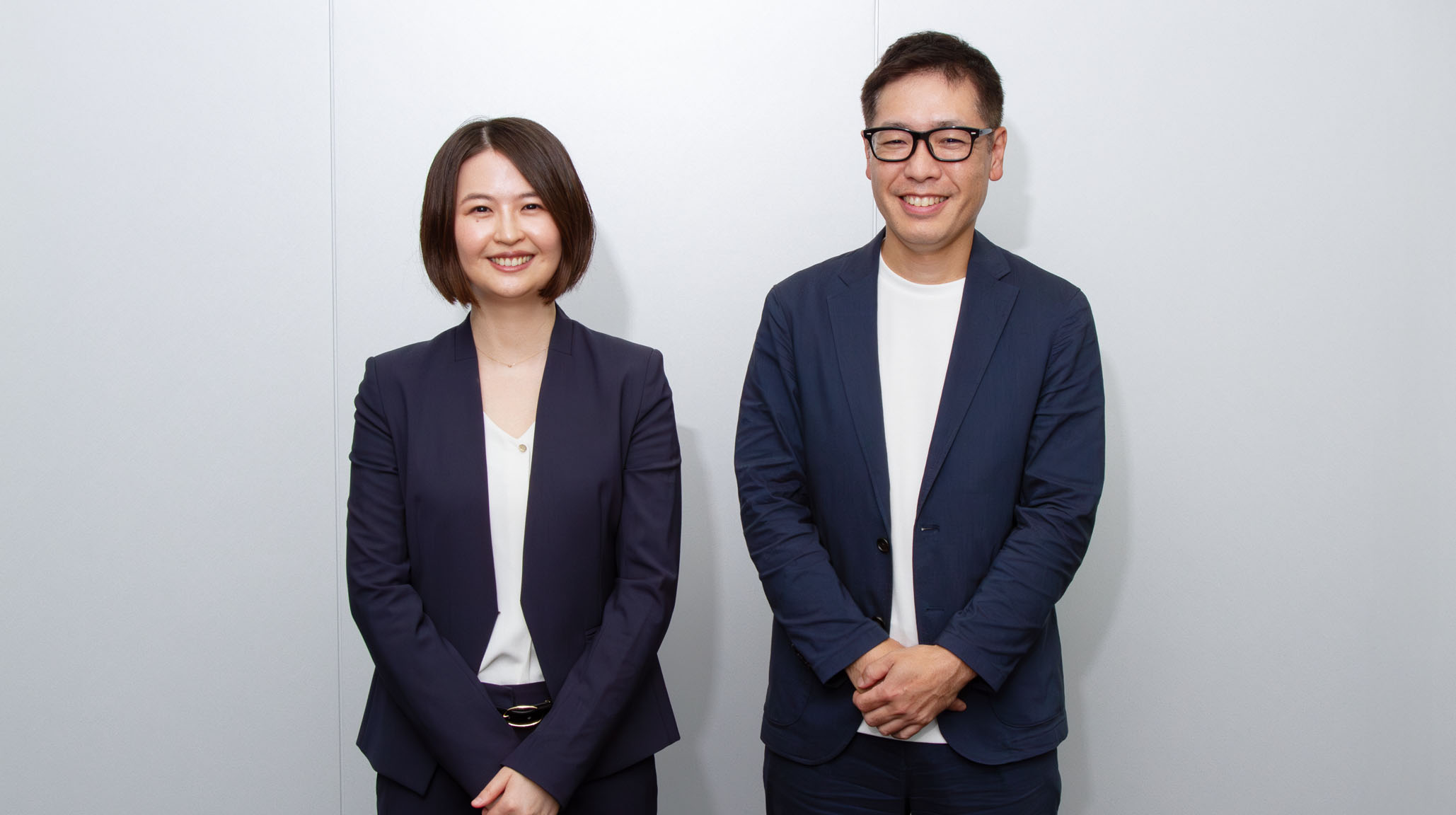
In 2022, TOKYU CONSTRUCTION CO., LTD. (Tokyu Construction) jointly established a CVC fund called TOKYU-CNST GB Innovation Fund L.P. with Global Brain. To date, the fund has invested in 12 startups in areas such as decarbonization, zero waste, and disaster prevention and mitigation. Together with the Tokyu Construction’s new business development team, the fund has built a track record of using startup products and collaborating with them.
We spoke to Koichi Fujita and Akari Tsushima from Tokyu Construction’s Innovation Department about their specific collaboration achievements to date, efforts in partnering with startups, and future prospects on investment.
Our strength is the readiness to partner with startups
──Tokyu Construction’s CVC has identified five investment areas: decarbonization, zero waste, disaster prevention and mitigation, human resources, and digital technology. Why were these areas chosen?
Fujita: We invest in fields based on our company’s long-term management plan called VISION 2030 which was formulated in 2021. In this long-term management plan, decarbonization, zero waste, and disaster prevention and mitigation have been defined as value propositions. In order to pursue these values, a policy to strengthen human resources and digitalization has also been outlined. CVC activities are carried out in line with this policy, and we have invested in 12 startups to date.
A distinctive characteristic of our CVC is the positive attitude toward collaborating with startups. We have two teams closely working on startup collaboration: an open innovation group which is responsible for CVC activities, and a new business development group which aims to create new businesses.
I think we have introduced more than 20 startup products and business models to our company through our CVC, and there are more than 10 projects that are working towards deeper collaborations. We have an environment that makes collaboration easy, as our company has secured a budget for conducting PoCs with startups and introducing their products.
Practical collaboration examples that go beyond just using the products
──Ten major collaborations in three years is quite a lot. Tell us about the specific initiatives that you are working with startups. First, what kind of initiatives are you running with Branch Technology (Branch), a US company with 3D printing technology?
Tsushima: Branch is a startup that has a 3D printing technology for lattice structures. We installed decorative walls and chairs that were made using their technology in our property in Shibuya. The chairs have lights on the inside and were finished with the same coating as the decorative walls, creating consistency to the designs.
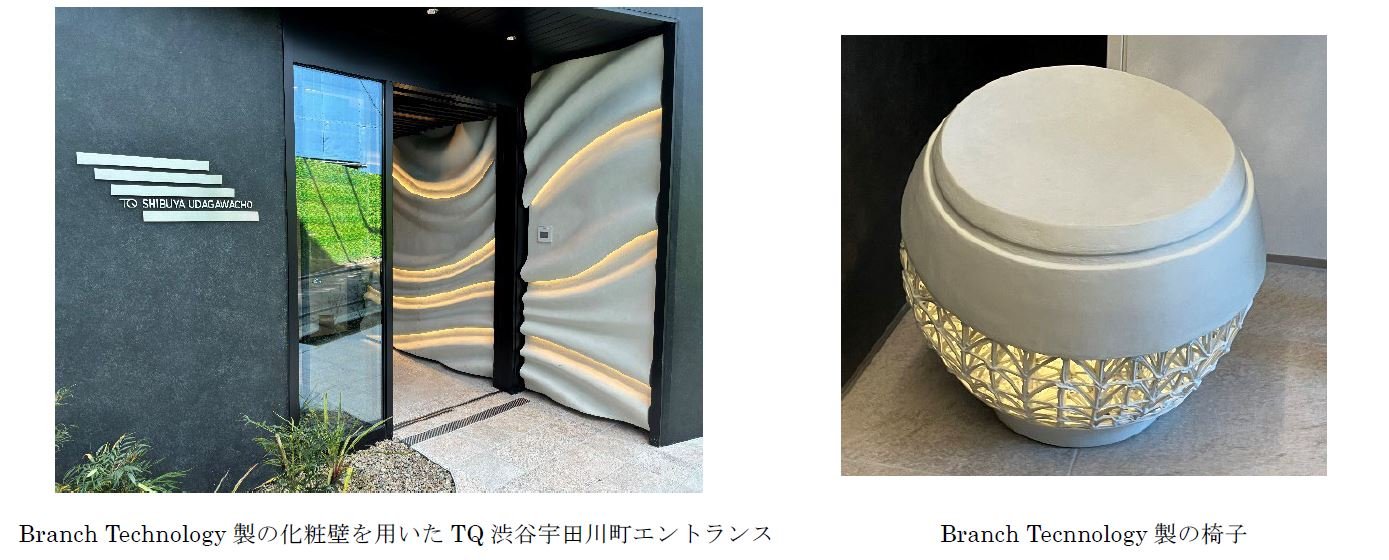
Many companies with general 3D printing technology have difficulty creating large-scale structures or face design limitations. But Branch can make large structures and craft complex designs including curves with its technology.
In addition, conventional 3D printer technology often requires metal molds, but Branch can create everything from scratch using only a 3D printer without the molds, which means zero waste. This resonates with our company’s vision and investment mandate of zero waste.
There are also advantages during construction. Branch’s decorative walls are manufactured at the factory, so all you have to do at the construction site is set it up. The installation this time only took about a day, which led to manpower-saving at the site.
Fujita: Branch’s technology is highly flexible and can be used to create a wide variety of items aside from decorative walls. We are currently working on a bid proposal for a certain company that involves using Branch’s technology to create their symbol mark and install it on a building. In the future, we want to expand the use of their technology on a larger scale, like covering the entire wall of a station.
──I heard that you are also investing in and collaborating with Mechasys, a Canadian company that improves work efficiency at construction sites.
Fujita: Yes. It is a startup that streamlines layout operations at construction sites. The layout operation is the process of drawing lines on columns, beams, walls, and other surfaces with ink to serve as guidelines for construction work based on the design drawings. The task of doing this on the ceiling while looking upward is particularly difficult and requires hard work.
Mechasys offers a system that uses lasers to project construction and design drawings onto various surfaces of the construction site. The product has reduced the workload by approximately 37% compared to conventional layout work. By upgrading the product with additional services and by becoming more familiar using the product, the process may be done in about half the man-hours.
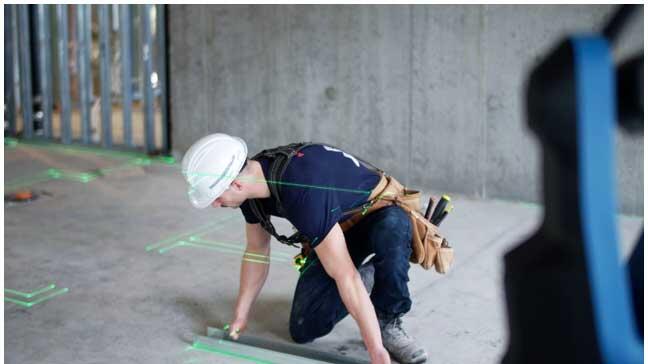
The construction industry is clearly facing a labor shortage, so we are keen to actively adopt solutions that will help improve productivity. The Construction Business Division is driving the use of Mechasys’ system, hoping to utilize it across many worksites and improve efficiency.
Tsushima: We are partnering with OKAYA, a trading company that handles steel and industrial materials, and Toda Construction, another construction company, aiming for the widespread use of Mechasys products not only within our company but throughout the entire value chain. When we conducted a demo using Mechasys at Toda Construction’s worksite for the press, it was covered by a major television station and other media outlets.
It is certainly challenging for an overseas startup like Mechasys to enter the Japanese market on its own. When portfolio startups expand into Japan, we believe it is ideal for us to serve as their Japanese partner and proceed as if we have formed a consortium, like we did in this case.
Fujita: Construction companies have quite a few connections with each other particularly among those involved in new businesses and CVC activities. We would like to continue working with other companies in the industry to support the companies we invest in.
──How about the collaboration with Clean Energy Connect (CEC), a company that provides green power services to corporations?
Fujita: Our company has established a business strategy for renewable energy, which includes on-site and off-site PPA (Power Purchase Agreement) businesses. To this end, we invested in CEC, a leading company in off-site PPA, and with their cooperation, we aim to use green energy in our offices and develop an in-house off-site PPA business.
First, we developed 47 low-voltage solar power plants nationwide exclusively for CEC and Tokyu Construction, which do not take advantage of the FIT (Feed-in Tariff) system. The electricity generated at these plants is sold on the general wholesale electricity market, but we have entered into contracts to purchase the environmental value of the renewable energy generated through this power generation. This is known as a virtual PPA, a contractual arrangement where actual electricity is not used, but by supporting the generation of renewable energy, the reduction in CO₂ emissions is recognized as part of the company’s own emissions reduction efforts.
We have introduced this virtual PPA system into our construction sites. This is the first initiative of its kind in the industry (Japanese only), and will provide us with approximately 4.4 million kWh of environmental value per year. This is equivalent to a reduction of about 1,900 tons of CO₂ and will have an impact of reducing roughly 20% of our annual CO₂ emissions at our construction sites.
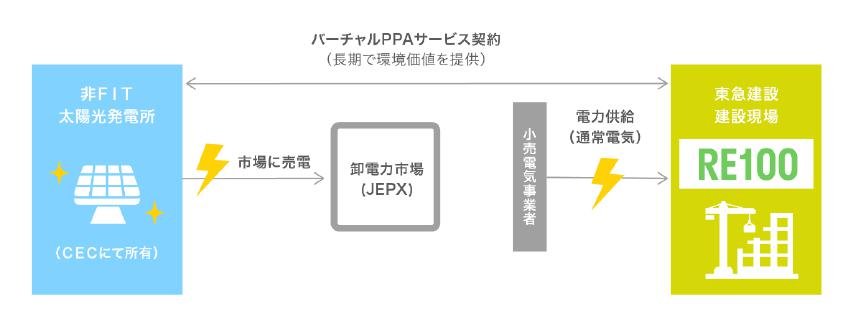
In order to implement virtual PPAs, it is necessary to estimate in advance how much electricity will be used. However, at construction sites, the use of large heavy machinery can cause electricity consumption to spike, while there are days when no electricity is used at all, making it difficult to predict electricity consumption. As a result, the introduction of off-site PPAs in the construction industry has been slow, but the implementation of virtual PPAs has made it possible to reuse electricity.
This initiative, made possible with the full support of CEC, is also having an impact within the industry. In fact, we heard that a major construction company in the industry has also begun introducing virtual PPAs. Thankfully, our efforts were recognized and we jointly received with CEC the New Energy Foundation Chairman’s Award, Introduction Activities Category (Japanese only) of the 2023 New Energy Award.
We have also started sales promotion of off-site PPAs (a system for receiving and using electricity from distant renewable energy power plants) developed in-house with the cooperation of CEC. This is primarily an attempt to provide off-site PPA services to our customers, who are mainly developers and building owners. The first project started at the end of last year, and we plan to proceed with the second and subsequent projects with CEC.
We do not want to be a messenger pigeon
──Tokyu Construction has taken a step forward in collaboration by undertaking industry-first initiatives and working with competitors to encourage the use of startup products. Collaboration with business divisions is essential, but what is your approach to maintaining good communication with other teams?
Fujita: About six months after establishing the CVC, we set up an internal system to build connections with each business division. Specifically, we had division heads appoint a CVC contact from each division to disseminate information to their subordinates and facilitate collaboration. We hold monthly meetings with these contact persons and their subordinates to share information on CVC initiatives and progress, as well as introduce new startups.
Also, to maintain close cooperation, we conduct more than 40 interviews per year for needs assessment with the contact person of each business division, and Global Brain, the general partner of the CVC fund, holds study sessions on startups for us. Thanks to these efforts, collaboration projects are gradually beginning to bear fruit.
In addition to the needs assessment, it is also important to establish a system that evaluates collaboration as part of the business division’s performance. Teams that work in close contact with the CVC including departments that promote digital transformation within the company have the number of collaboration projects set as targets, so cooperation tends to go very smoothly.
We should not be just introducing startups to business divisions like a messenger pigeon. It is important that we do not shy away from serving as a hub that connects business divisions and startups. If we become a hub, effectively make suggestions to the divisions, and if that leads to business, collaborations will move forward. In any case, we need to take the initiative to move collaborations forward, and that is the momentum we need to be mindful of.

──What do you keep in mind when you interact with startups that you are trying to collaborate with?
Tsushima: In order to build a win-win relationship, we try to be as considerate as possible of the startups’ situations. This is especially so for overseas startups. They are often not accustomed to the standard practices of Japanese companies, such as contract procedures. As startups have limited resources, we place great importance on finding ways to collaborate that will minimize their burden.
Fujita: I often talk with entrepreneurs about the size of the construction industry market and the assets we can offer.
The construction market is said to attract an annual investment of approximately 70 trillion yen in Japan alone. However, construction sites are still a closed work field with much room for development, making them a very attractive market.
Our technical research institute is equipped with various facilities (Japanese only), including an anechoic chamber, wind tunnel facilities, artificial weather facilities, and vibration equipment capable of reproducing complex vibration phenomena such as ground and building movements during earthquakes, all of which are open for use. We want to foster new partnerships by carefully communicating the vast scope of the construction industry and our company’s assets.
Tokyu Construction’s future — challenging and expanding its fields
──Three years have passed since the establishment of the CVC. Now that you have seen an increase in the number of portfolio companies and collaborative achievements, what kind of startups do you want to collaborate with and what are your plans for the future?
Tsushima: In the early stages of CVC establishment, we focused on areas that had synergies with our core construction business, but we are gradually increasing investments in startups in other areas of the construction industry.
One example is endophyte (Japanese only). endophyte has the technology related to DSE (Dark Septate Endophyte: a general term for fungi that live in forests and the roots of plants).
Tokyu Construction has launched the Earth Zoo project, which converts used disposable diapers into organic potting soil. As part of this project, we are conducting joint research to utilize endophyte’s microbial technology. If this research is successful, we will be able to develop a differentiated greening technology through a new approach, which is expected to create positive synergies in our efforts toward urban greening, something that both companies have high interest in.
The role of CVC includes gaining business knowledge that will be necessary in the long term, so that is something we will be seeking in future collaborations.
Fujita: We are looking forward to collaborating with startups that not only have business synergies with our company but are led by entrepreneurs who are passionate about their business. We are particularly interested in working with those who are committed to addressing fundamental challenges rather than pursuing short-term gains.
As I have mentioned, there are many challenges in the construction industry market. I believe that this is a sector with many potential customers for startups, so I would be delighted to meet entrepreneurs who are willing to enter this market and expand their business.
Note: Affiliations, titles, and figures are as of the time of coverage.
(Written by the Universe Editorial Team)