From Lost to Landed—How a Japanese Startup Named Things Won Kyoto Fusioneering’s Deal from a Major Corporation
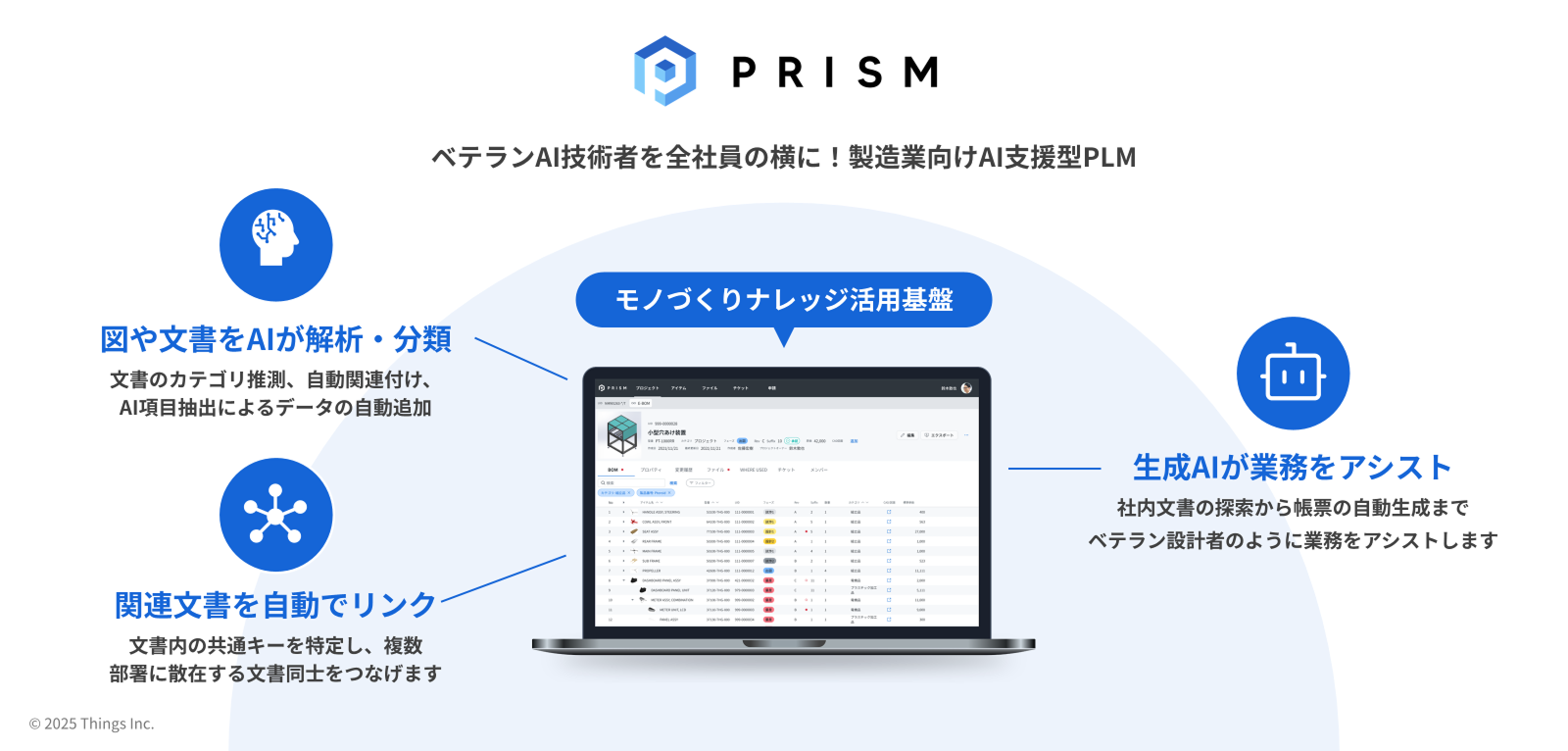
A company that introduced PRISM, a knowledge utilization platform for manufacturing companies developed by Things, explains the benefits and effects of the product, as well as key points to consider when selecting a PLM system from a customer perspective.

Kyoto Fusioneering Ltd. (KF) is a startup engaged in the engineering of nuclear fusion energy plants. When KF started exporting its products overseas, they adopted a PLM system (Product Lifecycle Management system: a core system that integrates and manages the entire product lifecycle by centralizing product information) provided by a large corporation.
However, only after 11 months, KF switched to a PLM system called PRISM offered by Things, Inc. (Things) due to usability issues. PRISM’s intuitive user interface was well-received by its employees, and the platform has been successfully utilized to achieve product traceability (the ability to track the entire process from production to consumption).
We spoke with Nobuko Hattori and Taiki Kukita of KF about the reasons for switching from a tool offered by a major corporation to PRISM and PRISM’s unique functions that they discovered after implementation. Joining them are members of Things who supported the introduction of PRISM, Representative Director and CEO Atsuya Suzuki and tech lead Dai Kato.
The reason for making a U-turn and swiftly adopting PRISM
──First, please tell us the background behind your decision to introduce a PLM system.
Hattori (KF): We first began considering adopting a PLM system about two years ago. We had mainly been engaged in research and development of fusion energy plant equipment and systems, and at the time, we were finally going to ship these products overseas. We realized that “Now is the time to properly manage our products using BOMs (Bills of Materials) and establish a system that would enable traceability,” and so we began searching for a PLM system.
However, as we are a startup with a limited budget, we could not afford to introduce a PLM which costs millions of yen in initial costs alone. We compared and evaluated more than 10 PLM systems to find a tool that met our requirements and was reasonably priced.
PRISM was one of them, but at the time, it did not have the document management function we were looking for, so we decided to use a different PLM system by a major corporation.

──Could you also tell us what led you to switch to Things’ PRISM?
Hattori (KF): When our team tried out the PLM system that was implemented, we found it very difficult to use. We could not even complete tasks that we were able to do yesterday without referring to the instructions, and we had a feeling that we would probably need to hold many training sessions if we were to roll it out company-wide.
Kukita (KF): In our organization, temporary staff and assistants will use the PLM system too. We came to the conclusion that it must be intuitive enough for even non-engineers to leverage BOMs in an ideal way.
Hattori (KF): So, we decided to look into other tools again, and since Things had added a document function to PRISM, we asked them to give us a demo once again.
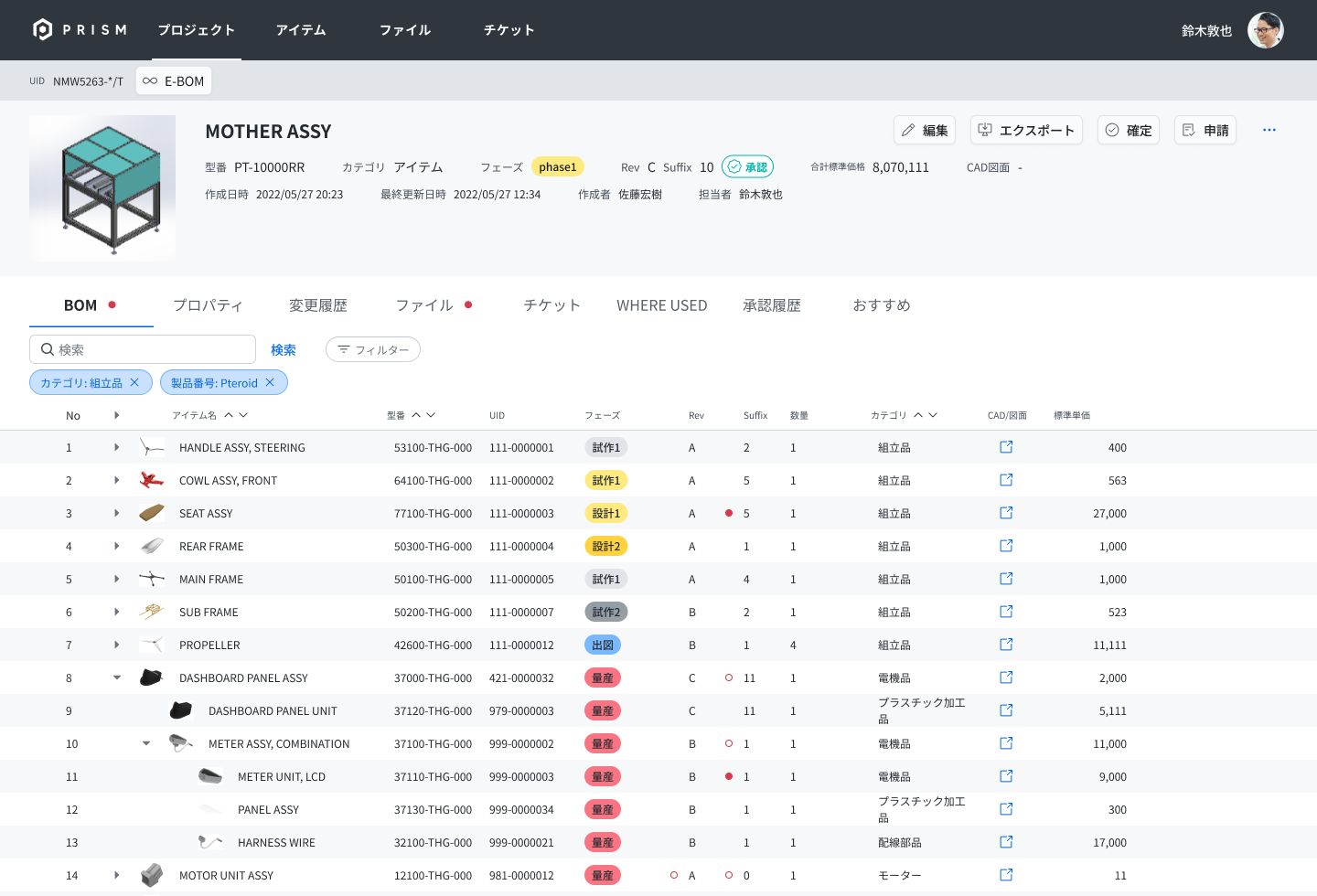
As we watched the demo, the changes were so dramatic that we all looked at each other in surprise and said, “This is a completely different tool!” The interface was intuitive and easy to understand at a glance, which was exactly what we were looking for. We all immediately agreed that this was the one.
Frontline users praising usability
──What benefits have you seen since you introduced PRISM?
Hattori (KF): We were able to link and manage information such as which product was shipped to where and when before the full-scale product shipping started. Previously, individual products did not even have numbers, but now we can number the products on PRISM and manage them properly.
Kukita (KF): When we only had one or two projects, we would somehow manually search for the products to be shipped from the pile of products in the warehouse and write them down one by one on a list to keep track. But as the company grew and we had more projects running, this was not practical anymore. Sometimes the same products were registered under different names, or products with different specifications were not distinguishable. This created risks such as serious shipping errors or a significant increase in the amount of work required for shipping.
Now that BOMs have been organized on the PLM system, we know what we want to send prior to shipping the items for multiple projects, and we can search for the products on-site and proceed with the shipping operations. Our workers at the site are telling us that the operations have become much easier.

Hattori (KF): We worked closely with Things in the operation.
Since many of our customers are overseas companies, we must conduct an export classification (a process to determine whether the goods or technology to be exported are subject to Japanese security regulations) and cannot ship without documents such as a parameter sheet or a certificate of non-applicability showing the results. In some cases, these documents must be attached to each individual part.
Additionally, in the nuclear industry, the document retention periods mandated by the government are extremely long, with some documents requiring storage for decades or even permanently. The fusion industry may also need to follow these guidelines.
We are still frequently consulting Things on how to manage the storage of such documents and documentation using PRISM.
──When introducing the PLM system, did the characteristics of your company’s business have any influence on your decision?
Kukita (KF): Fusion is technically very challenging, and we have experts from various industries and fields in our company. Thus, when we simply refer to a BOM, members have different ideas or images of it. Some may think of a P-BOM (Procurement Bill of Materials: procurement parts list), while others may imagine an E-BOM (Engineering Bill of Materials: design parts list), so we had a hard time deciding on the overall BOM concept.
Hattori (KF): We do not hire new graduates en masse, so each member has different standards regarding PLM systems and BOMs. Aligning these standards was a necessary part of the implementation process.
The unique development culture that leads to PRISM’s strengths
──KF seems to appreciate PRISM’s intuitive usability. Are there any particular aspects that Things focuses on during development?
Suzuki (Things): Things was founded in 2021 and is a latecomer to the PLM vendor market. However, we started as Japan’s first SaaS-native PLM system and have adopted an agile development approach. We have an operational structure in place where we immediately reflect customer feedback to the production environment and make frequent improvements as necessary. This flexibility and speed are our unique strengths.
The concept of PLM itself has been around for 30 years, but in the beginning, it was based on a waterfall model and on-premises deployment, and there were few players who adopted a development system based on SaaS. This ability to implement a late-mover strategy is what makes PRISM unique.

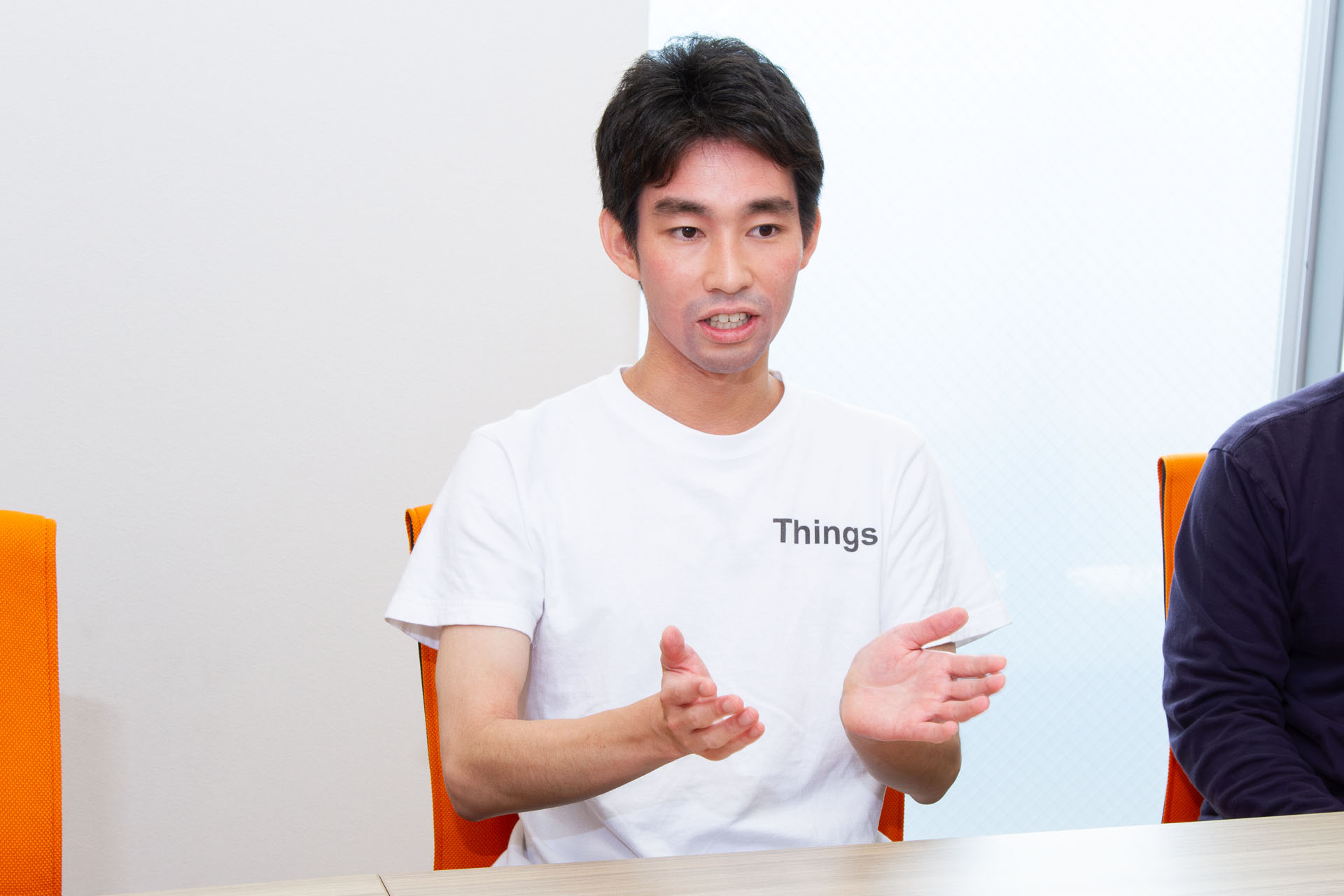
Kato (Things): I believe one of the reasons why people find it easy to use is the object-oriented design approach we have adopted in PRISM.
In general tool development, functions are often designed to be found in menus, such as File → Open, and the corresponding screen is displayed.
On the other hand, with the object-oriented design, objects such as buttons are placed in advance so that they can be operated intuitively by touching them.
This development culture has had a significant impact on the PRISM’s usability.
──Were there any initial settings customized for KF when introducing PRISM? Tell us about the functions that were developed or tweaks that were made based on KF’s request.
Kato (Things): We need to migrate the customer’s data to PRISM before system implementation, so we developed a new function prior to the data migration.
Before migrating the data, we interviewed KF about how they use the system and learned that they needed to keep shipping statuses for each project. PRISM did not have this functionality at the time, but we thought that it would be useful not only for KF but also for other customers, so we developed the function and released it in about a month.
We have a development system where engineers are involved from the specification phase, which means there are only a few revisions when we implement it and we can respond to sudden development requests with speed and agility.
Suzuki (Things): In the world of hardware development, there is an approach called front loading that involves investing time and effort in the design stage to minimize rework in later stages. We have adopted this front loading approach and incorporated various perspectives from the early stages of requirements analysis to minimize rework in the implementation stage. In fact, I believe that the software industry has much to learn from the manufacturing industry which is often called “legacy.”
Kato (Things): KF also managed product data in Excel, so we also resolved inconsistencies that arose during data import into BOMs.
When attempting to transfer data from Excel to BOMs as-is, problems such as duplicate data and errors would arise, even if it appeared to be correct at first glance.
Therefore, we worked with KF to organize the data and perform the migration. We especially collaborated closely with Kukita-san, and once we even spent about two hours online reviewing the data together to ensure it was properly formatted.
This was our first attempt at directly converting Excel data into BOMs, so we learned a great deal from the process.
──So, the two companies worked hand in hand to implement the system. Were there any other instances where the strengths of both companies came into play in utilizing PRISM?
Suzuki (Things): KF is a company that thinks about the ideal system they want and then works backward to request the necessary functions.
Rather than taking a passive stance and asking us to propose what PRISM can do, they give us feedback such as “Can you do this too?” when we show them what PRISM is capable of doing. Then, we would respond to that and then receive further feedback. I am positive that we have good chemistry.
Thanks to our collaboration, PRISM is evolving into a product that can respond to even the most nuanced needs, and we are excited about the future possibilities with KF moving forward.
The future of PRISM evolving with AI and API integration
──Do you have any advice for other manufacturers considering a PLM system?
Kukita (KF): When multiple members with different backgrounds use the system as they do in our company, it is essential that it is intuitive and easy to use.
Also, operations are often not fully established especially for startups and companies introducing a PLM system for the first time. In such cases, whether the system can be customized to some extent, as with PRISM, is an important selection criterion. Because if the system is inflexible, you will be constrained by it and operations will not run smoothly.
Hattori (KF): Another point is not to decide based solely on functionality. We created a table to establish the criteria for selecting a PLM system by first identifying the desired functions and confirming whether each PLM system possesses them, marking them “good”, “bad”, or “in between.” When evaluated against these criteria, all the functions of the PLM system by the major corporation we initially adopted were rated as “good.” We realized that even if a system has all the necessary functions, it will not be good enough if it lacks usability.
It is also important to be able to easily ask for advice on how best to utilize the system after implementation. Things is very helpful because when we tell them what we want to do, they immediately respond with suggestions such as, “We can do that,” or “Let’s add this function.”
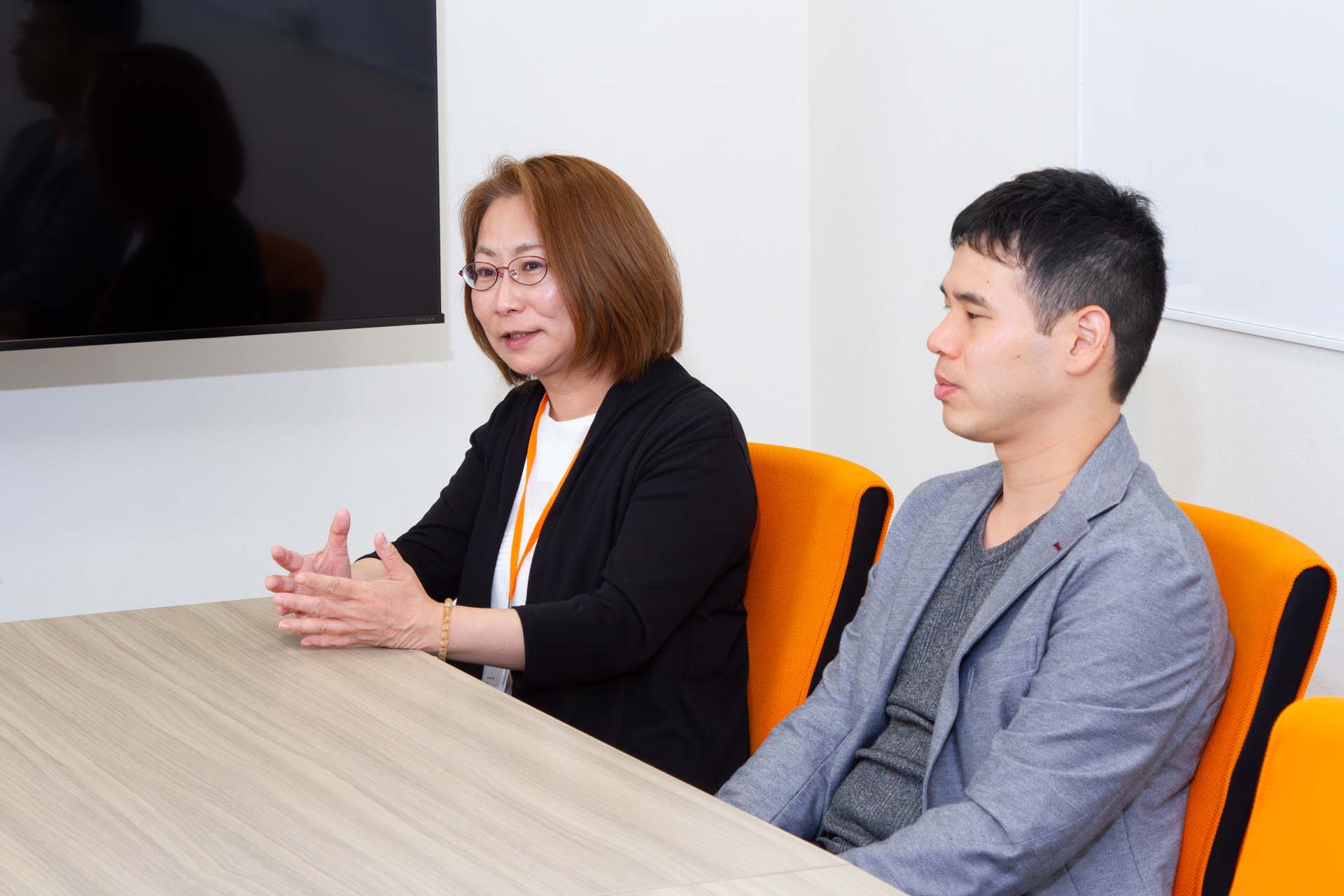
Kukita (KF): Actually, at first I had the impression that Excel and SharePoint alone would be sufficient for managing BOMs and documents. However, after trying it out, I found it extremely difficult to ensure the traceability of each individual part and manage changes across multiple BOMs, and there were limitations of just using Excel and SharePoint. After using PRISM, I truly realized the necessity of PLM systems.
Suzuki (Things): Thank you. The PLM system is equipped with a where-used function which enables managing changes at the parts level and links it to the product configuration (BOM). For example, if there is a change in a single part, you would normally need to edit the Excel file 100 times to reflect the change in all 100 models that use that part. However, with PLM, you can reflect the change in all products at once with a single click, which is by far more efficient.
In addition, since parts and related documents can be managed together, reusing past design assets becomes easier. This offers various benefits including speeding up the start of the design phase or preventing dependency on individuals for technical expertise because all design documents are centrally managed.
──How would KF like to expand the use of PRISM in the future? And what does Things have in mind for future updates to PRISM?
Kukita (KF): We are currently in the phase of utilizing PRISM for BOM management. Going forward, we would like to register documents in PRISM so that anyone in the company can easily access the same information.
We are also thinking of using PRISM for the workflow of registering BOMs and documents, as well as for status management. This is actually what we are discussing right now with Things.
Hattori (KF): Going forward, we plan to integrate data with various other tools via APIs and other means. In fact, we have already completed integration with our cost management ERP system. When purchasing parts, we first register them in PRISM before placing an order and then process the payment using the PRISM number. PRISM is truly becoming the hub of our operations.
Kato (Things): As Kukita-san mentioned, we are currently considering expanding the workflow function. In the immediate future, we are developing a more flexible document management function to accommodate cases such as trade-related documents, where the document content differs for each case even if the parts are the same.
Suzuki (Things): Since BOMs are master data for manufacturers, we aim to make it our core product that enables customers to achieve higher levels of cost management, procurement management, and inventory management by linking it with peripheral applications such as ERP and production management.

We are also focusing particularly on the use of GenAI. PRISM can accumulate not only trade documents but also a large amount of diverse unstructured data such as specifications and test data. We are striving to automatically structure this information using GenAI and build a data platform that can be used across PRISM.
Once this is achieved, documents uploaded to PRISM will become shared knowledge that can be immediately utilized throughout the organization, accelerating the horizontal dissemination of know-how. In the future, we aim to create something of a senior AI designer that can provide appropriate answers to natural language questions such as “What are the potential failure risks to consider with this design change?” based on past knowledge.
We believe that by evolving PRISM from the PLM system’s traditional role as a data platform into an AI assistant that leverages our extensive technical knowledge, we can provide new value to manufacturing sites as a PLM system that thinks rather than a mere management tool.
Note: Affiliations, titles, and figures are as of the time of coverage. (Interviewed and written by the Universe Editorial Team)