AI Model Photo Studio: Canon Marketing Japan’s Startup Collaboration
Canon Marketing Japan and AI model have launched a feasibility study on generating and providing fashion photographs using AI models, mainly for the e-commerce apparel sector. What are the impetuses behind this partnership and its benefits for customers?
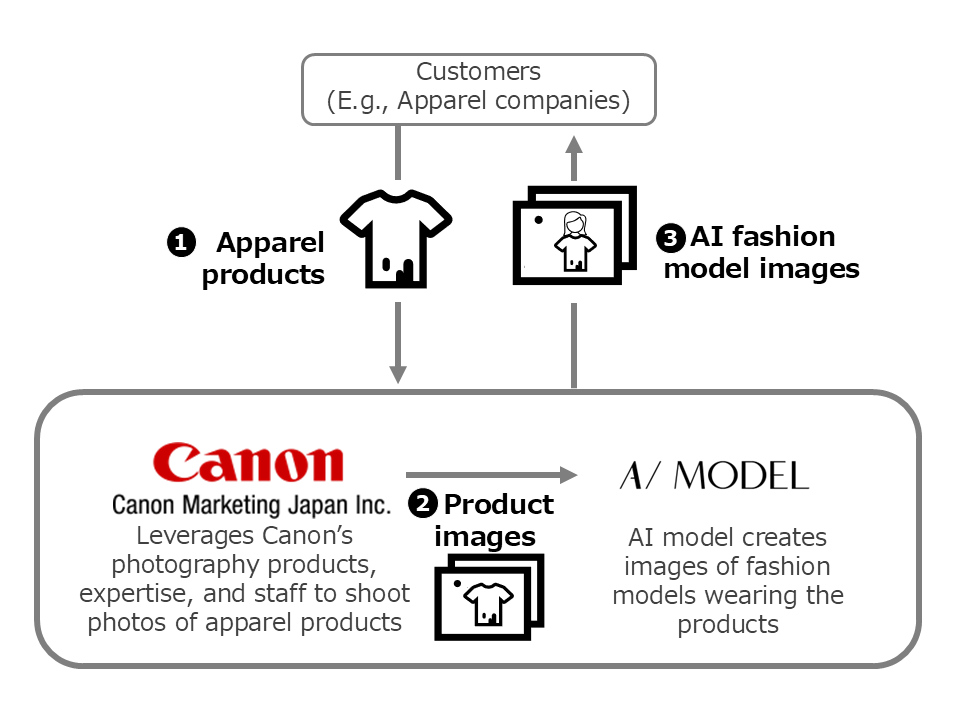
Canon Marketing Japan Inc. (Canon MJ) has invested in AI model Inc. (AI model) through its corporate venture capital (CVC) fund Canon Marketing Japan MIRAI Fund and initiated a joint feasibility study targeting apparel companies that run e-commerce sites.
AI model is a startup that leverages its proprietary GenAI technology to create AI fashion models. These models are designed to optimize the generation of creative content for various media, including television commercials, e-commerce sites, and catalogues, with the aim of supporting clients in reducing costs and increasing revenue.
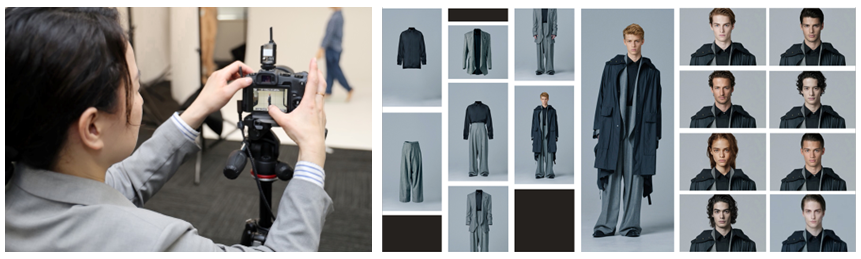
The feasibility study has successfully generated AI fashion models using product images captured with Canon-made cameras and lighting equipment combined with Canon MJ’s advanced imaging technology and expertise. Now that this framework is established, they are equipped to produce high-quality photographs for e-commerce platforms. Implementation for large enterprise clients has already begun and the project is progressing toward official commercialization.
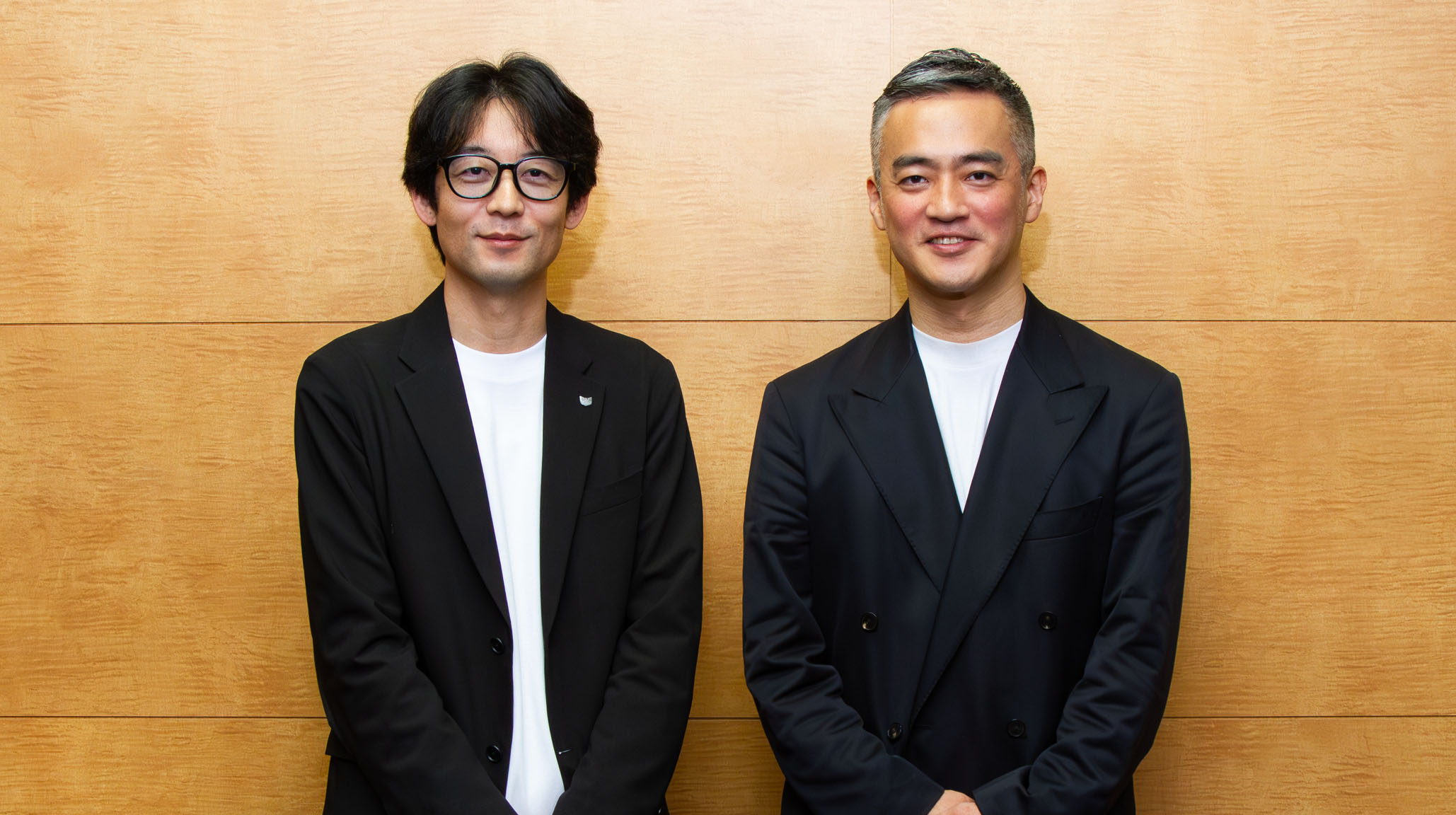
We sat down with Shunsuke Abe of Canon MJ’s R&B (Research and Business Development) Promotion Center and Daiki Taniguchi, CEO of AI model, to learn about the origin of this project, its benefits for customers, and the collaborative process between the two companies.
This is it! The affinity between the two sides
──Tell us about the background of this feasibility study.
Abe: For some time, Canon MJ had been exploring the idea of a business focused on providing AI solutions for creative content.
Businesses that produce creative content such as images and videos confront significant challenges including labor shortages and labor-intensive work styles. My background in cameras and B2C marketing for many years, coupled with interactions with companies in this industry, has given me firsthand experience and a strong awareness of these issues.
Also, corporations and local municipalities often face difficulties using creative content due to cost or rights issues. For instance, using promotional photos prepared in Japan at overseas locations may incur additional costs. This poses a significant obstacle for small and medium-sized enterprises and local municipalities with limited resources.
Our company envisioned that AI might be the breakthrough to this structural problem surrounding creative content. We thought that by combining our imaging technology with AI, we could potentially address challenges in production speed and quality as well as rights management, and empower customers with greater freedom of expression.
──The idea already existed when you met AI model.
Abe: Yes. Global Brain (GB), our CVC fund manager, introduced us to AI model. The moment I met CEO Taniguchi-san, I knew we had found what we were looking for.
Rather than generating images from scratch using GenAI, AI model shoots photographs of products such as clothes and creates AI fashion models using those images. I felt this business model has a strong affinity with our imaging technology.
As conversations with Taniguchi-san progressed, it became clear that AI model was struggling to cope with the high volume of customer photo shoot inquiries. Recognizing an opportunity to leverage our existing cameras, equipment, and photo shooting expertise and team structure, we established an in-house studio to cater to corporate clients.
Taniguchi: Establishing a studio for AI fashion model photo shoots was not our initial intention, but it emerged as one idea as we explored how to progress this collaboration. We are profoundly grateful for the opportunity to integrate our AI technology with Canon MJ’s expertise, a synergy we believe will deliver unparalleled value.
Effective for promoting e-commerce sales
──How will this initiative benefit customers’ e-commerce businesses?
Taniguchi: First and foremost, shorter lead times for creating images. Apparel e-commerce businesses face opportunity losses if products are not uploaded to their websites while they can still be sold at full price. Therefore, photographing and releasing images as quickly as possible—even a half or one day sooner—is highly desired.
However, using human models for photo shoots can cause delays in e-commerce releases. This is because photographs are typically taken only after a certain number of products are ready, in order to reduce shooting costs per clothing item.
Our system eliminates the need for human models. Customers can photograph clothing on a mannequin, and we can generate an AI fashion model image for immediate e-commerce upload. A demonstration experiment showed this reduces lead time by up to 70% compared to traditional human model photo shoots.
Plus, it is not just about faster lead times. Another significant benefit is the efficient generation of high-quality fashion model images, tailored to each brand’s specific aesthetic.
Given that most apparel products are stored in rural warehouses equipped with adjoining photo studios, models are typically required to travel one and a half to two hours each way from urban areas to participate in photo shoots.
Companies occasionally struggle with scheduling and long-distance travel expenses, even when they have found a model that perfectly aligns with their brand image. This often forces them to compromise creativity, resorting to product-only photography or using an alternative model without showing the face.
However, apparel e-commerce sites faced a dilemma: images of products worn by models showing their faces have higher conversion rates.
Our technology allows users to not only generate clothing images on AI models, but with customizable facial expressions, poses, hair lengths, and skin tones. This enables rapid creation of optimal images that align with product concepts, ultimately driving sales effectively.
──What is unique about the equipment used in the studio?
Abe: It turned out AI model had been using our entry-level camera, so we have provided high-end cameras for this project. Additionally, we are sharing our expertise in areas such as lighting equipment and computer software to maximize AI model’s technological capabilities.
Going forward, we are excited to launch a new studio by combining Canon’s other assets including our VR and various technologies and solutions that use hardware such as IP cameras. I believe it is crucial to not only do apparel photo shoots but to combine our technologies and create a business with synergy.
Taniguchi: By combining our strengths, we can offer completely novel solutions in society, benefiting not only our customers but contributing to advancing the entire creative content industry. We look forward to undertaking such initiatives together.
Engaging internal stakeholders for new businesses
──Due to differing goals and operational styles, business collaborations between startups and large corporations often falter. How did you ensure the smooth progression of the feasibility study?
Taniguchi: Initially, I had concerns about the speed of collaboration. Given the rapid changes inherent in startups, I frankly questioned whether a large corporation like Canon MJ could keep up with our pace.
However, Canon MJ swiftly handled all matters making me even doubt they were a large organization. This smoothed our progress as we did not need to be overly considerate.
Abe: Thank you. Throughout this collaboration, I was mindful of achieving quick, small wins.
With four to five years in new business development, I frequently encountered a common pitfall: getting mired in medium to long-term visions instead of prioritizing quick, small wins, leading to stalled progress. When such stagnation persists, the new business development team can be perceived as underperforming, leading to budget or headcount reductions—a negative cycle any company risks falling into.
For new businesses, accumulating quick wins is crucial. To achieve this, we were prepared to leverage any internal company asset or know-how, an approach that proved successful.
──I assume communication with internal stakeholders is key to leveraging your company’s assets. What did you keep in mind and what are some specific actions you took?
Abe: Yes, communication with internal stakeholders is extremely important. Engaging internal stakeholders is crucial for the new business development team’s success, particularly given its small size.
Approximately 20 members were involved in this project, including individuals from the Consumer Business Unit, which focuses on B2C channels and was my previous department, as well as additional support staff.
Doing business with AI model gives them opportunities to acquire new knowledge and motivation for work. I shared with them the significance of undertaking a new business endeavor and were able to secure their commitment.
I truly feel that successful new business development hinges on leveraging existing internal connections and know-how, engaging stakeholders, and accumulating small wins.
Finance, retail, and entertainment—expanding future collaboration ideas
──Tell us about next steps. After the feasibility study, what kind of customers are you targeting as potential users?
Abe: Our target users are large corporations and the government, as well as small and medium-sized companies and local municipalities that had previously found creative content inaccessible due to cost. Together with AI model, we aim to build a world where anyone can freely express themselves creatively at any time.
Our AI-generated models have applications beyond the apparel industry. We are exploring their potential use at the counters of financial institutions and retail stores. The concept involves developing AI models of customer-facing staff, bundled with our visual equipment, such as digital signage solutions. In collaboration with Kasanare (Japanese only), a company that provides a customizable solution for optimizing GenAI with their proprietary technology infrastructure, we have initiated a demonstration experiment to test AI models capable of real-time customer communication.
Leveraging our strong foundation of trust built with customers across various industries through sales of office equipment such as printers, we plan to conduct demonstrations for these existing clients to test and understand their diverse needs concerning AI models.
Taniguchi: Japan’s declining birthrate and aging population necessitate higher efficiency across various industries. While our primary focus remains on large apparel corporations, we are keen to apply our AI models to boost productivity in other sectors including finance, distribution, and retail, as Abe-san noted.
──So we might start seeing AI models in various settings, not just e-commerce sites.
Abe: Yes, we are also exploring an intellectual property (IP) business as our future business model. We believe that collaborating with AI model could lead to new opportunities, for example in the entertainment sector.
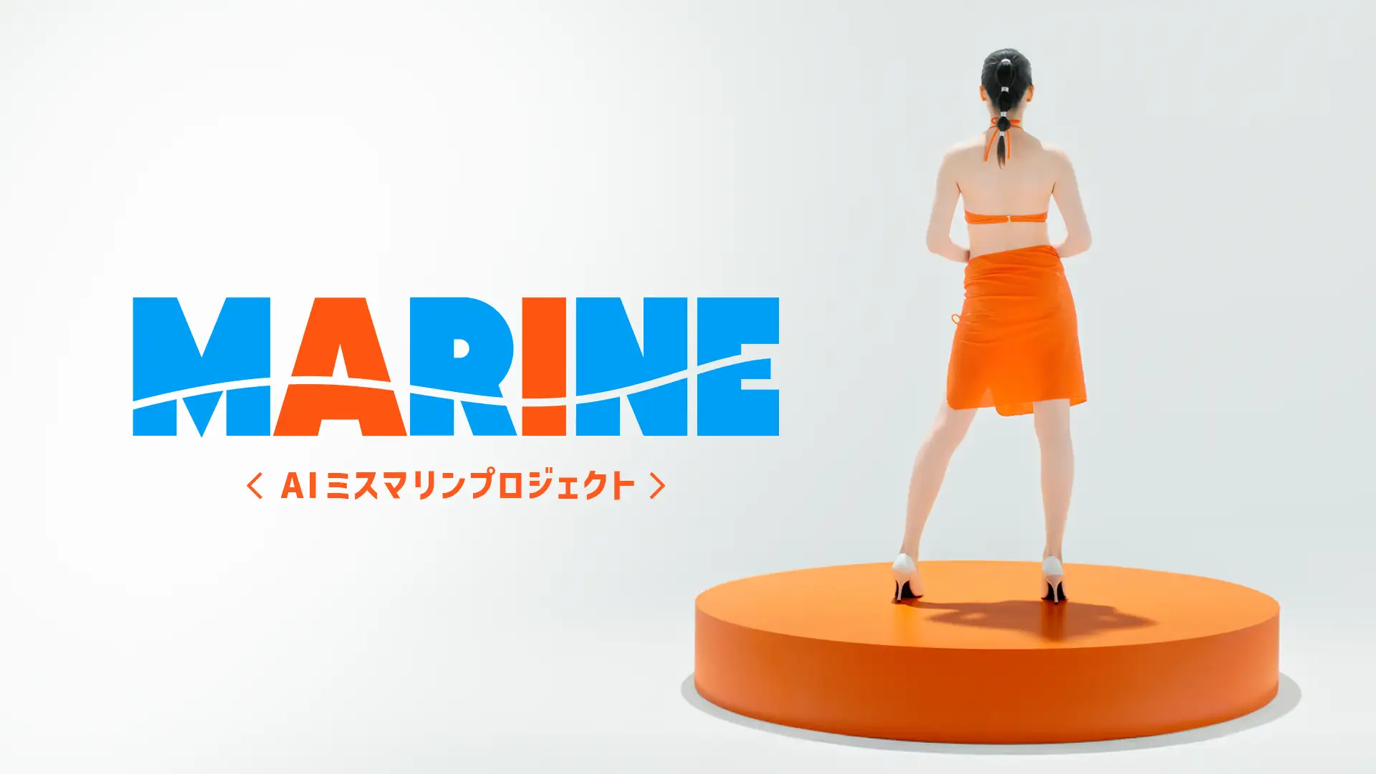
Taniguchi: We have actually embarked on an initiative very like what Abe-san just mentioned, collaborating with pachinko machine manufacturer Sanyo Bussan to release a project featuring 34 AI Miss Marine-chan models of its popular character, Marine-chan, to hold a popularity vote (Japanese only). This is a completely new undertaking, where our customer company creates unique AI actors or models and transforms them into assets by acquiring fans. I am confident this is an area where we can collaborate with Canon MJ.
Our project involving Kasanare to use AI models for customer-facing staff is a completely new service we had never even imagined that came into being thanks to our collaboration with Canon MJ and GB. We are excited to work with many more partners and take on new challenges.
Abe: I feel the same way. I am eager to grow the network we have established among AI model, GB, and Canon MJ to foster more business opportunities and shared understanding. We are hoping to involve more companies as we move forward, so we would be happy to hear from any businesses interested in collaborating.
Note: The names of roles and affiliations may have changed after the interview. (Interviewed and written by the Universe Editorial Team)